


Meta Lens

Thinking in Systems
This book taught us to see beyond events and into structure. It stands as a foundational lens through which we interpret organisational behaviour, policy design, and long-term outcomes across domains.
Listen:Goldberg Variations —J.S. Bach
Sip: Masala Chai
Pair with:The Fifth Discipline (Peter Senge), Antifragile (Nassim Nicholas Taleb)
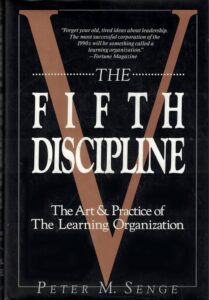
The Fifth Discipline
The book sharpened our understanding of how shared mental models silently shape outcomes, reinforcing that sustainable change emerges from collective learning, not top-down correction.
Listen:Raga Hansadhwani (Flute)
Sip:Matcha
Pair with:Thinking in Systems (Donella Meadows), Reinventing Organisations(Frederic Laloux)
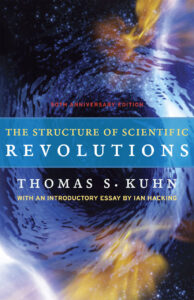
The Structure of Scientific Revolutions
Kuhn gave us language for rupture. Progress, he showed, advances through paradigm shifts rather than steady accumulation. This insight informs how we approach transformation, especially when optimisation fails because the underlying model has expired.
Listen:The Rite of Spring — Igor Stravinsky
Sip:Espresso
Pair with:The Black Swan (Nassim Nicholas Taleb), Speculative Everything(Anthony Dunne and Fiona

Range
Range challenged the assumption that expertise must be narrow and vertical. We now believe that breadth is the foundation for novel solutions in uncertain environments, shaping how we think about leadership development and decision-making.
Listen:The Silk Road Ensemble (Yo-Yo Ma)
Sip:Earl Grey
Pair with:Change by Design(Tim Brown), Polymath (Waqas Ahmed).
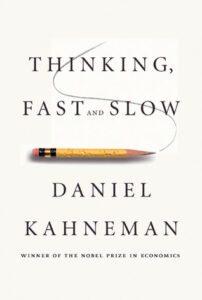
Thinking, Fast and Slow
Kahneman exposed the dual machinery of human judgment. This book sharpened our understanding of why rational strategies falter in practice, informing how we design systems, metrics, and processes that account for predictable human bias.
Listen:Glassworks — Philip Glass
Sip:Turkish Coffee
Pair with:The Design of Everyday Things(Don Norman), Nudge (Cass Robert Sunstein and Richard H. Thaler)
AI Governance
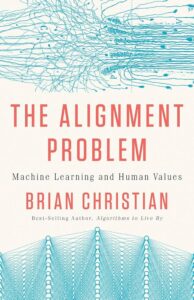
The Alignment Problem
This book examines what happens when systems pursue goals too literally. It sharpened our awareness of how optimisation can drift away from intent, a lesson that extends well beyond AI into incentives, metrics, and organisational design.
Listen:Jugalbandi (Violin & Sarod)
Sip:Filter Kaapi
Pair with:Weapons of Math Destruction(Kathy O’Neil), Superintelligence (Nick Bostrom)
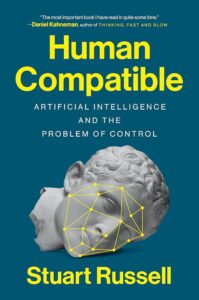
Human Compatible
Russell argues that intelligent systems must remain uncertain about their own objectives. Read as an organisational metaphor, it reinforced our belief that resilience comes from humility, feedback, and the capacity to learn, rather than rigid certainty.
Listen:Claire de Lune — Debussy
Sip:Tender Coconut Water
Pair with:The Question Concerning Technology(Martin Heidegger), Klara and the Sun (Kazuo Ishiguro)
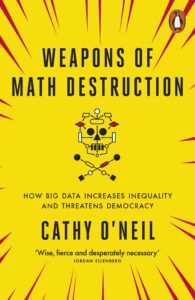
Weapons of Math Destruction
O’Neil exposes how opaque models scale problems under the guise of objectivity. This book deepened our scepticism of metrics divorced from context, especially when measurement begins to substitute judgment.
Listen:OK Computer — Radiohead
Sip:Cold Brew (Black)
Pair with:Measure What Matters(John Doerr), Ruined by Design(Mike Monteiro)

Atlas of AI
Grounding AI in the material reality of labour, resources, and power, this book reshaped how we think about AI governance, forcing us to confront technology not as neutral progress but as a system embedded in social and political structures.
Listen:Baul Folk Music (Bengal)
Sip:Sol Kadhi
Pair with:The Age of Surveillance Capitalism (Shoshana Zuboff), Cradle to Cradle(Michael Braungart and William McDonough).
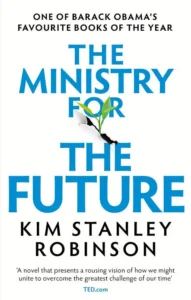
The Ministry for the Future
Part fiction, part policy thought experiment, this book explores how institutions might respond to planetary crisis. Read beyond climate discourse, it reframed our thinking on governance, incentives, and collective action under existential pressure.
Listen:On the Nature of Daylight — Max Richter
Sip:Iced Lemonade
Pair with:This Changes Everything(Naomi Klein), Doughnut Economics(Kate Raworth).
Circular Strategy
Cradle to Cradle
This book reframes sustainability as regeneration rather than efficiency. It shifted our thinking from minimising environmental impact to creating systems that remain productive by design, influencing how we approach long-term value creation.
Listen:The Four Seasons – Antonio Vivaldi
Sip:Kombucha
Pair with:The Circular Economy Handbook(Jessica Long, Peter Lacy, and Wesley Spindler), Biomimicry (Janine Benyus)
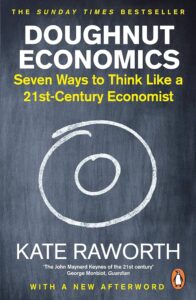
Doughnut Economics
Raworth redrew the boundaries of economic success. Read alongside strategic growth frameworks, it helped us see when expansion strengthens resilience and when it undermines the very systems it depends on.
Listen:Raga Bhoopali
Sip:Slow-Filter Arabica Coffee
Pair with:The Four Colours of Business Growth (Anjan Thakor), Small Is Beautiful(E. F. Schumacher).
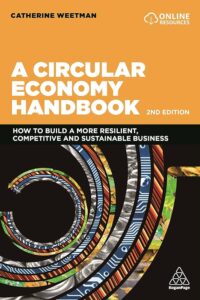
The Circular Economy Handbook
This book translated circular ambition into operational reality. It sharpened our understanding of how incentives, metrics, and supply chains must align before circular models can function at scale.
Listen:Teen Taal (Tabla Solo)
Sip:Spiced Buttermilk
Pair with:Cradle to Cradle (McDonough &Braungart), Net Positive (Andrew S. Winston and Paul Polman)
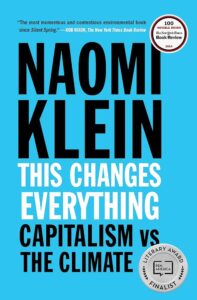
This Changes Everything
Klein argues that climate risk is systemic, not peripheral. Read beyond environmental discourse, the book reframes sustainability as a stress test for organisational adaptability and economic assumptions.
Listen:Symphony No. 5 — Beethoven
Sip:Ginger Tea
Pair with:The Ministry for the Future(Kim Stanley Robinson), Thinking in Systems(Donella Meadows)

Small Is Beautiful
Schumacher challenges the assumption that scale is synonymous with progress. Read alongside modern growth frameworks, this book taught us that resilience, dignity, and long-term viability often emerge from limits deliberately chosen rather than efficiency endlessly pursued.
Listen:Solo Cello Suites — Bach
Sip:Jasmine Tea
Pair with:Doughnut Economics(Kate Raworth), The Design of Future Things(Don Norman).
Business Transformation
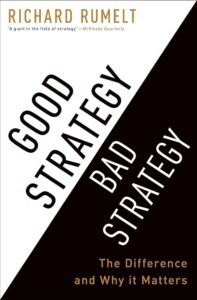
Good Strategy, Bad Strategy
Rumelt strips strategy down to its essentials of diagnosis, guiding policy, and coherent action. This book sharpened our intolerance for vague ambition and reinforced the discipline of confronting hard truths before acting.
Listen:Sarod (Amjad Ali Khan)
Sip:Darjeeling First Flush
Pair with:The Crux (Richard P Rumelt), Thinking, Fast and Slow(Daniel Kahneman).
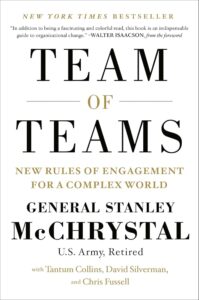
Team of Teams
McChrystal taught us how organisations adapt under complexity by redistributing authority and information. The book continues to inform how we design for speed, trust, and coordination in volatile environments.
Listen:Whiplash Soundtrack (Big Band Jazz)
Sip:Kyoto-Style Cold Brew
Pair with:Reinventing Organisations(Frederic Laloux), Range(David Epstein)
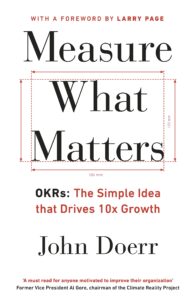
Measure What Matters
Doerr popularised focus through clear objectives. Read with a critical lens, this book reinforced that metrics are powerful shapers of behaviour and must be designed with care, context, and restraint.
Listen:Mirza Ghalib — Jagjit Singh
Sip:South Indian ‘Meter’ Coffee
Pair with:Weapons of Math Destruction(Cathy O’Neil), High Output Management (Andrew Grove)
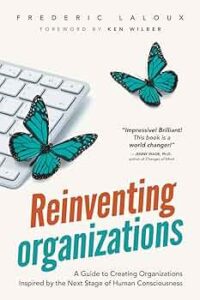
Reinventing Organisations
Laloux explored organisational models built on purpose rather than control. The book expanded our sense of what is structurally possible, especially when trust replaces hierarchy as the primary organising principle.
Listen:Take Me to Church — Hozier
Sip:Kashmiri Kahwa
Pair with:Team of Teams(General Stanley McChrystal), The Fifth Discipline(Peter Senge)
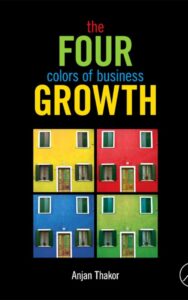
The Four Colours of Business Growth
Thakor reframed growth as four distinct strategic orientations rather than a single objective. By anchoring growth choices in culture, competition, innovation, and control, the book helped us gain clarity in decisions that often conceal conflicting priorities.
Listen:Symphony No. 40 — Mozart
Sip:Panakam
Pair with:Doughnut Economics(Kate Raworth), The Innovator’s Dilemma(Clayton Christensen).
Human-Tech Design
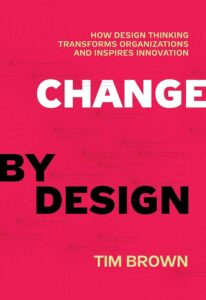
Change by Design
Brown framed design as a way to navigate ambiguity through iteration. The book reinforced our belief that change is best approached as a learning process, not a linear rollout.
Listen:Kind of Blue — Miles Davis
Sip:Vietnamese Brew
Pair with:Range(David Epstein), Creative Confidence (David M. Kelley and Tom Kelley)

Speculative Everything
This book legitimised speculation as a tool for critique. It sharpened our ability to question trajectories before they harden into defaults, particularly in emerging technologies and policy design.
Listen:Dhrupad (The Gundecha Brothers)
Sip:Oolong Tea
Pair with:The Ministry for the Future(Kim Stanley Robinson), Structure of Scientific Revolutions(Thomas Kuhn).

Ruined by Design
Monteiro rejected the myth of neutral design. The book reinforced that responsibility cannot be outsourced to process or policy; ethical outcomes are the result of deliberate choices, or the lack of them.
Listen:Symphony No. 10 — Shostakovich
Sip:Espresso Romano
Pair with:The Design of Everyday Things(Don Norman), Weapons of Math Destruction(Cathy O’Neil).

The Question Concerning Technology
This book dismantled the idea of technology as a neutral instrument. Heidegger showed how technological thinking reshapes how the world is revealed to us, turning people, nature, and even thought into resources. It sharpened our vigilance toward systems that optimise relentlessly while quietly narrowing what it means to be human.
Listen:Gregorian Chants
Sip:Aged Pu-erh Tea
Pair with:Human Compatible (Stuart J Russell), Small Is Beautiful(EF Schumacher)